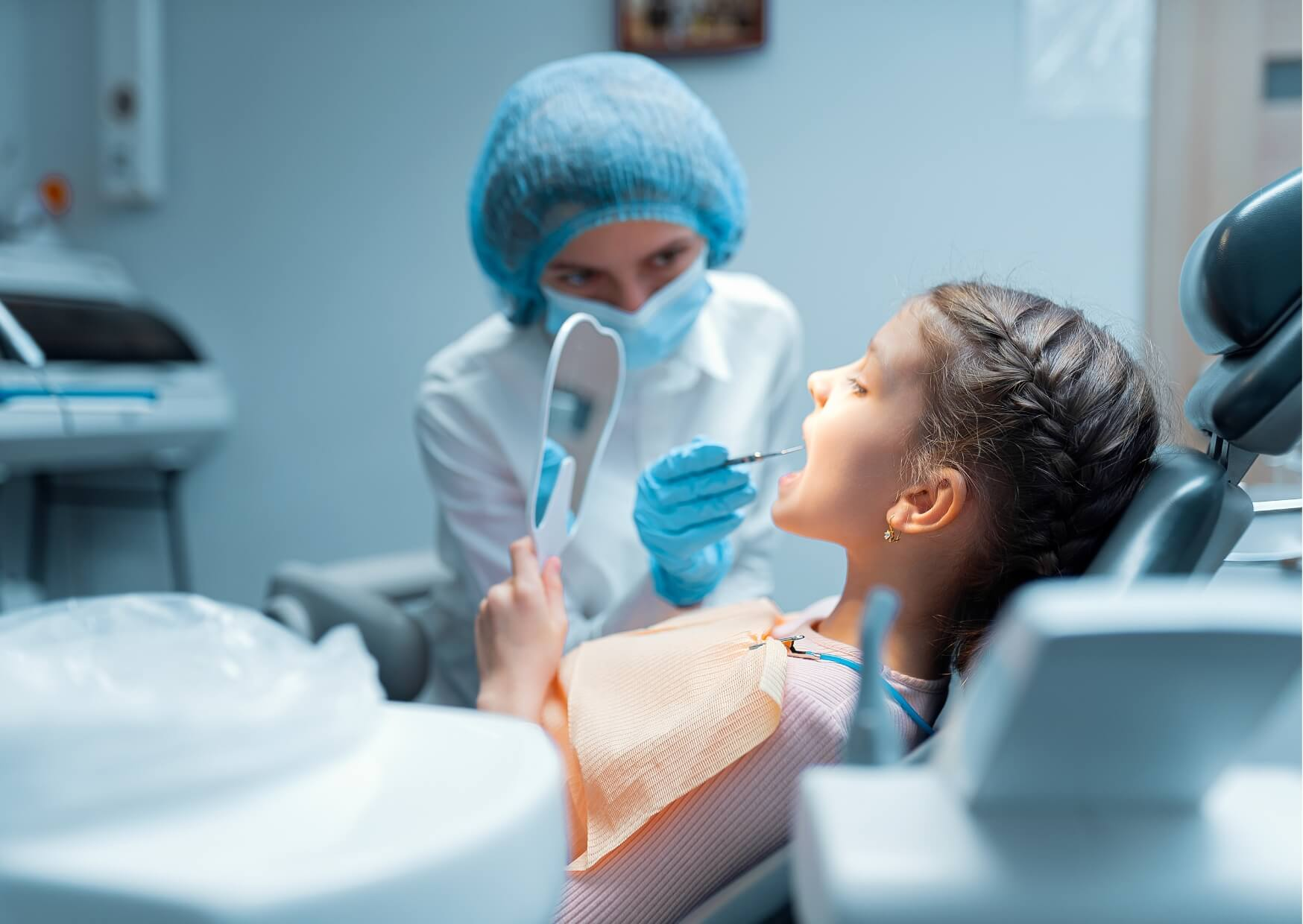
A parent often notices the issue during an ordinary moment. A baby tooth comes out earlier than expected, or a dentist points to a gap on an X-ray and explains that keeping that space open now may help the adult tooth come in later.
If you are unsure when to schedule visits or what to watch for, see our child's first dental visit.
A dental spacer, also called a space maintainer, is a small appliance used to hold space for an adult tooth after a baby tooth is lost too early.
At Oasis Smile Studio, our general dentistry team in High Point, NC provides preventive exams and space evaluations for children who may need this kind of care.
Baby teeth help with chewing and speech, but they also guide the permanent teeth developing under the gums. Good oral hygiene can help prevent the decay that sometimes leads to early tooth loss.
When a baby tooth is lost too soon, nearby teeth can drift into the open area. If that happens, the adult tooth may have less room to erupt, which means come through the gums, in a normal position.
A spacer does not push teeth into place. Its job is simpler: it helps preserve the space that is already there while the mouth continues to grow.
The most common reason is early loss of a baby tooth from decay, trauma, or extraction. If the permanent tooth is not expected soon, a dentist may recommend a spacer to lower the chance of crowding or misalignment.
If early tooth loss is related to decay, the child may also need restorative care to repair or protect nearby teeth. You can learn more about cavity formation and common composite fillings used to treat cavities.
Not every lost baby tooth needs a spacer. The decision depends on the child’s age, which tooth was lost, how much space is available, and how close the permanent tooth is to erupting.
Back teeth are a common concern because they help maintain arch length, or the amount of room available for future teeth. When a baby molar is lost early, nearby teeth may shift faster than parents expect.
Front teeth are different. In many cases, a spacer is less likely to be needed there, especially if the permanent tooth is expected soon, but the decision still depends on the exam and X-rays.
Many children receive a fixed spacer. This usually includes a small metal band attached to a nearby tooth with a loop or extension that keeps the missing-tooth space open.
Some children may receive a removable spacer, but this is less common because it depends on consistent wear and careful handling. For younger children, fixed appliances are often easier and more reliable.
The exact design depends on where the missing tooth was and how many teeth are involved. A pediatric dentist or a general dentist who treats children will choose the type that best protects the space while still allowing normal growth and cleaning.
At first glance, spacers can look more intimidating than they are. In practice, they are usually small, durable, and designed to stay out of the way as much as possible.
A new spacer may feel strange for the first few days. Mild pressure, extra saliva, or a temporary change in speech can happen while the mouth adjusts.
Most children adapt quickly. Eating may feel awkward at first, especially with chewy foods, but the appliance should not cause ongoing significant pain.
Some gum tenderness can happen after placement. Persistent pain, swelling, or bleeding is not something to ignore and deserves a call to the dental office.
Parents often ask whether a child will constantly notice the spacer. Usually, once the adjustment period passes, many children stop paying much attention to it.
A little soreness right after placement may be normal. Ongoing pain is different and may mean the appliance is rubbing the gums, has loosened, or is trapping food and plaque around the area.
If a spacer feels loose, it needs prompt attention. A loose appliance may stop doing its job, and in some cases it can irritate soft tissue or become a choking risk if it comes off.
Food getting packed around the band or loop is also common. That does not always mean something is wrong, but it does mean cleaning needs extra attention because plaque buildup can inflame the gums and raise the risk of decay around the anchor tooth.
Bad breath, gum swelling, or a child avoiding chewing on one side may be signs that the area needs to be checked. These symptoms do not automatically mean a serious problem, but they are worth taking seriously.
The decision is usually based on both the clinical exam and dental X-rays. The dentist looks at the missing tooth site, the position of nearby teeth, and the stage of development of the permanent tooth below.
Timing matters. If the adult tooth is expected soon, a spacer may not help much. If an eruption is still far away, preserving space becomes more important.
The dentist also checks the bite, jaw growth, and whether crowding is already present. In some children, the question is not only whether a spacer is needed, but which design will maintain space without interfering with normal function. Professional clinical guidelines help inform that decision.
This is one reason quick online comparisons can be misleading. A spacer is not a one-size-fits-all device, and the right choice depends on the pattern of growth in that child’s mouth.
Placement is usually a simple dental visit. The dentist may take measurements, an impression, or a digital scan so the spacer fits the tooth and the space accurately.
At the fitting visit, the appliance is tried in and secured. Children often do well with this process because it is brief and does not usually involve the kind of recovery families associate with more invasive treatment.
After placement, the dentist explains what foods to avoid and how to clean around the appliance. Follow-up matters because the spacer needs to be monitored as the child grows and as the permanent tooth gets closer to erupting.
Most children can go back to school and do normal daily activities right away. The bigger adjustment is usually food choice and cleaning habits.
Sticky candy, chewing gum, and very hard foods can damage or dislodge a spacer. Many problems start here, not because the appliance is fragile, but because children naturally test limits once it begins to feel normal.
Brushing around the band and gumline is especially important. Parents may need to help younger children clean carefully around the appliance because trapped food can lead to gum irritation or decay.
Flossing may also need to be adjusted depending on the spacer type. The dental team can show the safest way to keep the area clean without bending or pulling on the appliance.
Call the dentist if the spacer becomes loose, bent, broken, or comes off. Also call if a child reports increasing pain, has visible gum swelling, or develops sores where the appliance is rubbing.
If the appliance is loose or causing pain or swelling, seek emergency care right away.
A spacer that slips under the gum or pokes the cheek should not be watched at home for days. A loose or displaced spacer needs prompt dental review because it may stop protecting the space and can create a safety issue. Published reports on spacer complications support careful follow-up when appliances loosen or irritate tissue.
If there is fever, facial swelling, trouble swallowing, or severe pain, urgent evaluation is important. Those symptoms may point to a more significant dental problem that needs timely care.
General education can help families know what to watch for, but it cannot replace an exam when symptoms are worsening, severe, or unclear.
Some children wear a spacer for months. Others may need it longer, depending on age and the timing of the permanent tooth.
The appliance is usually removed when the adult tooth is ready to come in or when the dentist decides the space is stable enough without it. Regular checkups are what make that timing safe.
This part can feel slow for families. Still, the goal is prevention, and prevention often looks quiet while it is working.
A spacer is not meant to be permanent. It is a temporary tool used during an active stage of growth, when small shifts in tooth position can have larger effects later. Research suggests these appliances can help prevent orthodontic problems by limiting unwanted tooth movement after early tooth loss.
Most children tolerate spacers well and return quickly to normal routines. The main responsibilities are keeping follow-up visits, protecting the appliance from damage, and paying attention to new discomfort.
Parents do not need to monitor every bite or every word. They do need to notice patterns, especially pain that is not settling, food trapping that seems excessive, or an appliance that suddenly feels different.

When used for the right reason, a spacer can be a practical way to protect the path for a future adult tooth. It is a small device with a specific job, and in many cases that job can help prevent more complicated spacing or orthodontic problems later.
If a child has lost a baby tooth early or a dentist has mentioned spacing concerns, a general dentistry exam can clarify whether a spacer is useful now and what kind of follow-up makes sense.
Oasis Smile Studio offers general dentistry in High Point, NC and serves families from Greensboro and Thomasville. Call (336) 885-9021 to schedule an appointment.
No. The need depends on the child’s age, the tooth involved, available space, and how soon the permanent tooth is expected to erupt.
Usually yes, after a short adjustment period. Sticky and very hard foods are often the biggest problem because they can loosen or bend the appliance.
It may feel strange or mildly sore at first, but ongoing pain is not expected. If pain persists or gets worse, the dentist should check it.
Contact the dental office promptly. Do not assume the space will stay open on its own, especially in a growing mouth.
The dentist monitors growth, X-rays, and the eruption of the permanent tooth. Removal is usually timed for when the adult tooth is ready to come in or the space no longer needs support.