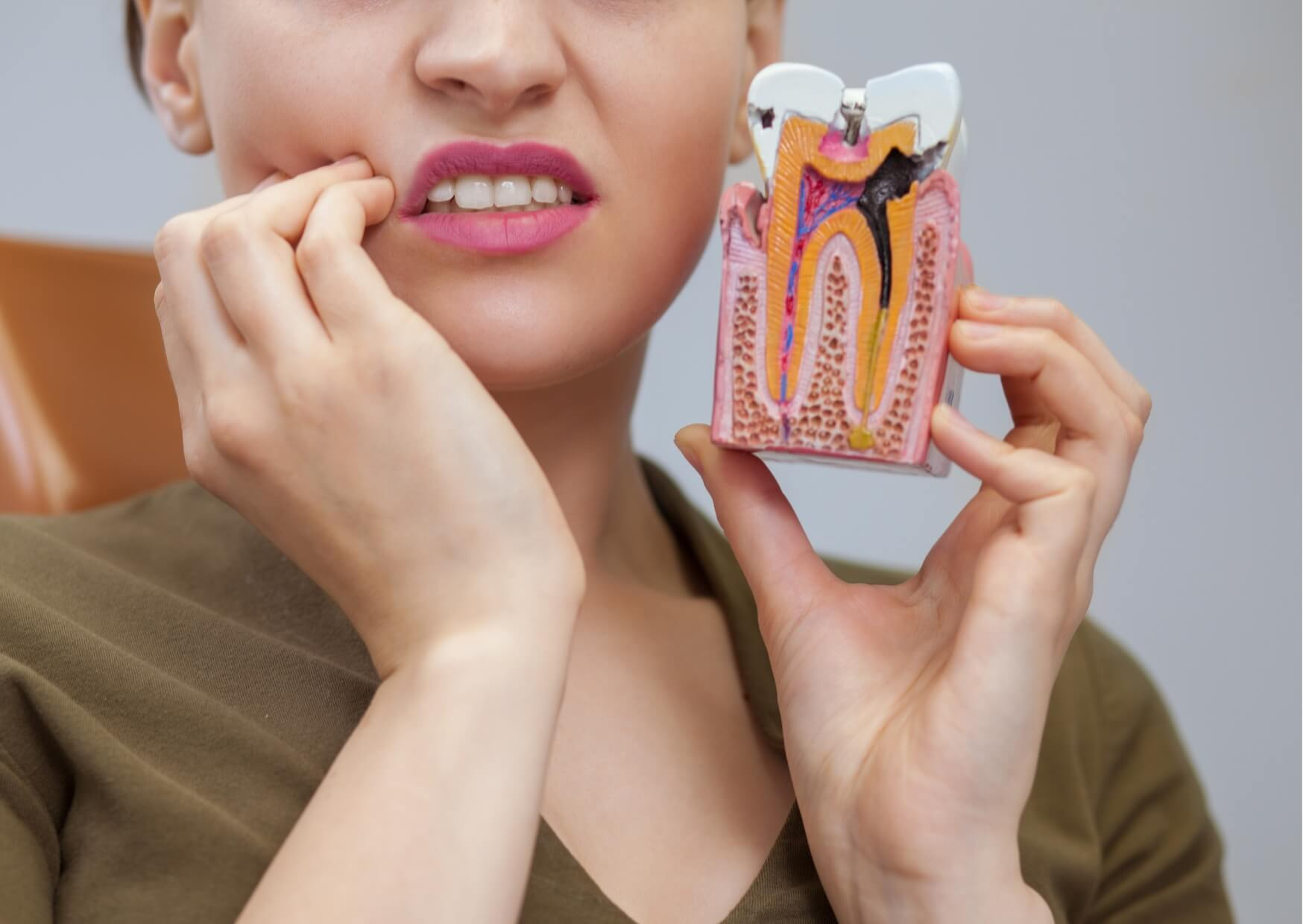
A common dental concern often starts small. You may notice a rough spot on a tooth, a little sensitivity to cold water, or food catching in one area, then wonder if it might go away on its own.
That question makes sense. Teeth feel strong and permanent, so it is easy to assume a weak area might repair itself the way a cut on skin does.
The short answer is this: a true cavity does not heal itself. But very early tooth damage, before a hole forms, can sometimes be stopped or reversed with the right conditions and professional guidance.
That distinction matters. It can mean the difference between monitoring an early weak spot and needing a filling, crown, or more involved treatment later. Understanding the cavity formation timeline helps explain why.
Oasis Smile Studio provides general dentistry in High Point, NC, and offers the preventive exams and early guidance someone asking this question may be looking for.
A cavity is an area of tooth structure damaged by decay. The process begins when bacteria in dental plaque, the sticky film on teeth, break down sugars and produce acids.
Those acids pull minerals out of the enamel, which is the hard outer layer of the tooth. This early stage is called demineralization, meaning the tooth is losing calcium and phosphate faster than it can replace them.
If that mineral loss continues, the enamel can weaken enough to form a physical hole. Once that happens, the tooth cannot rebuild the missing structure on its own.
This is the key point behind the question, can a cavity heal itself? Early mineral loss may improve, but lost tooth structure does not grow back.
Dentists sometimes see early decay that looks like a chalky white spot instead of a hole. At this stage, minerals can sometimes move back into the enamel through a process called remineralization.
Saliva plays a major role here. It helps neutralize acid and carries minerals that support repair of early surface damage.
Fluoride can also help strengthen enamel and make it more resistant to acid. That is one reason dentists take early enamel changes seriously even when there is no pain.
Reversal is most realistic when the surface is still intact. Once the enamel collapses or decay reaches deeper layers, the tooth usually needs treatment rather than watchful waiting.
An early lesion may look dull white, chalky, or slightly brown instead of showing a visible hole. There may be mild sensitivity, or no symptoms at all.
Even so, appearance alone is not enough to confirm what is happening. Some stained grooves are not active decay, and some active decay is hard to see without an exam and X-rays.
Once decay creates a cavity, part of the tooth has been structurally lost. Enamel does not contain living cells that can rebuild a missing section the way bone or skin can after injury.
Dentin, the layer under the enamel, is softer and more vulnerable to rapid spread of decay. When bacteria reach dentin, the process often speeds up.
This is why waiting can become costly. A small cavity that may have needed a simple filling can turn into a larger problem involving deep decay near the nerve, a cracked tooth, or infection.
Pain is not a reliable measure of severity. Some cavities become quite large before they cause noticeable symptoms.
Tooth decay can cause different symptoms depending on its depth and location. A crack, leaking filling, or gum recession can also affect how the tooth feels.
Sensitivity does not always mean a cavity, but it should not be ignored if it keeps happening. Common symptoms include:
Some symptoms deserve prompt evaluation rather than routine monitoring. For a deeper look at how decay feels, see cavity symptoms.
Seek dental care soon if you have swelling, throbbing pain, pain that wakes you from sleep, or pain with facial pressure. These can be signs that decay has reached the pulp, the inner tissue containing nerves and blood vessels, or that an infection is developing.
Fever, spreading swelling, trouble opening the mouth, or difficulty swallowing are more urgent warning signs. Those symptoms need prompt professional assessment. If you have those symptoms, seek emergency care.
A dental exam is not just about finding a hole. The dentist is trying to determine whether the area is active, how deep it is, and whether the tooth is still structurally sound.
This usually includes a visual exam, a discussion of symptoms, and X-rays when appropriate. X-rays are especially useful for decay between teeth or under older restorations. Learn more about a cavity between teeth.
The dentist may assess:
That bigger picture matters. A single cavity is one issue, but repeated decay often points to a pattern that needs attention if treatment is going to last.
The answer to whether a cavity heals itself depends on the stage of the tooth when it is examined. Dentists generally think in terms of early mineral loss, a small cavity, or deeper structural damage.
The goal may be to stop the process and support remineralization. That can involve professional fluoride treatment, changes in home care, and closer follow-up.
This is not the same as the tooth fully regenerating. It means the early damage may stabilize enough that drilling is not needed right away.
A filling is often the standard treatment. Learn about composite filling treatment for a common restorative option.
The decayed portion is removed, and the tooth is rebuilt with a restorative material. For larger cavities, Restorative dentistry options such as inlays, onlays, or crowns may be recommended.
If the cavity is larger, the tooth may need more support than a simple filling can provide. In those cases, an inlay, onlay, or crown may be discussed depending on how much healthy tooth structure remains.
When bacteria and inflammation affect the pulp, the tooth may need root canal treatment to remove infected tissue and preserve the tooth. If the tooth cannot be predictably restored, extraction may sometimes be the safest option.
That is why early evaluation matters. The earlier the stage, the more conservative the treatment often is.
If a tooth is sensitive or you suspect decay, keep the area as clean as possible with gentle brushing and flossing. Try to avoid frequent sugary snacks or sipping sweet drinks over long periods, since repeated acid exposure drives the decay process.
Very hot, very cold, or sticky foods may trigger symptoms. Softer, less irritating foods for a day or two may help you stay more comfortable while you arrange an exam.
Do not try to scrape, seal, or repair the tooth at home. Home fixes can hide the problem, irritate the tooth, or delay care that is actually needed.
People often ask can a cavity heal itself because they hope to avoid treatment, cost, or bad news. That reaction is normal, especially during busy weeks when it is easy to put off care.
But decay is usually easier to manage when it is treated early. The real goal is not just stopping pain. It is preserving as much healthy tooth as possible for as long as possible.
That makes this less about blame and more about timing. A prompt exam can clarify whether the tooth needs monitoring, a simple filling, or more involved care, and that clarity alone often lowers anxiety.
If you notice a new rough spot, visible hole, food trapping, or sensitivity that lasts more than a few days, it is reasonable to book a dental visit. If symptoms are worsening, spontaneous pain starts, or chewing becomes difficult, try to be seen sooner.
In many cases, the answer is not dramatic. The tooth may have an early area that can be monitored, or it may need a straightforward filling before the problem grows.
Either way, getting a clear diagnosis is better than guessing. If you are wondering whether a tooth can recover on its own, a dentist can tell you where that tooth falls on the spectrum from early mineral loss to a true cavity and what the next step should be. Consider scheduling an exam if you notice changes that concern you.
For a clear exam, Oasis Smile Studio’s general dentistry team in High Point, NC, also serving surrounding communities, can help. Call (336) 885-9021 to schedule.
Yes, a tooth can have early decay or even a formed cavity without pain. Lack of pain does not mean the area is healthy, so an exam is still important if you notice a spot, roughness, or food trapping.
Enamel can sometimes regain minerals in the very early stage of damage, before a hole forms. That is different from regrowing a missing piece of tooth.
A stain may look dark but feel smooth and remain stable over time. A cavity may be soft, rough, catch food, or show changes on X-rays, but only a dental exam can reliably tell the difference.
Brushing helps remove plaque and lower the risk of further decay, but it cannot rebuild a hole in the tooth. Read more about not brushing.
A cavity becomes more urgent when there is swelling, severe or throbbing pain, pain that spreads, fever, or trouble swallowing. Those symptoms can suggest deeper infection and should be assessed promptly.