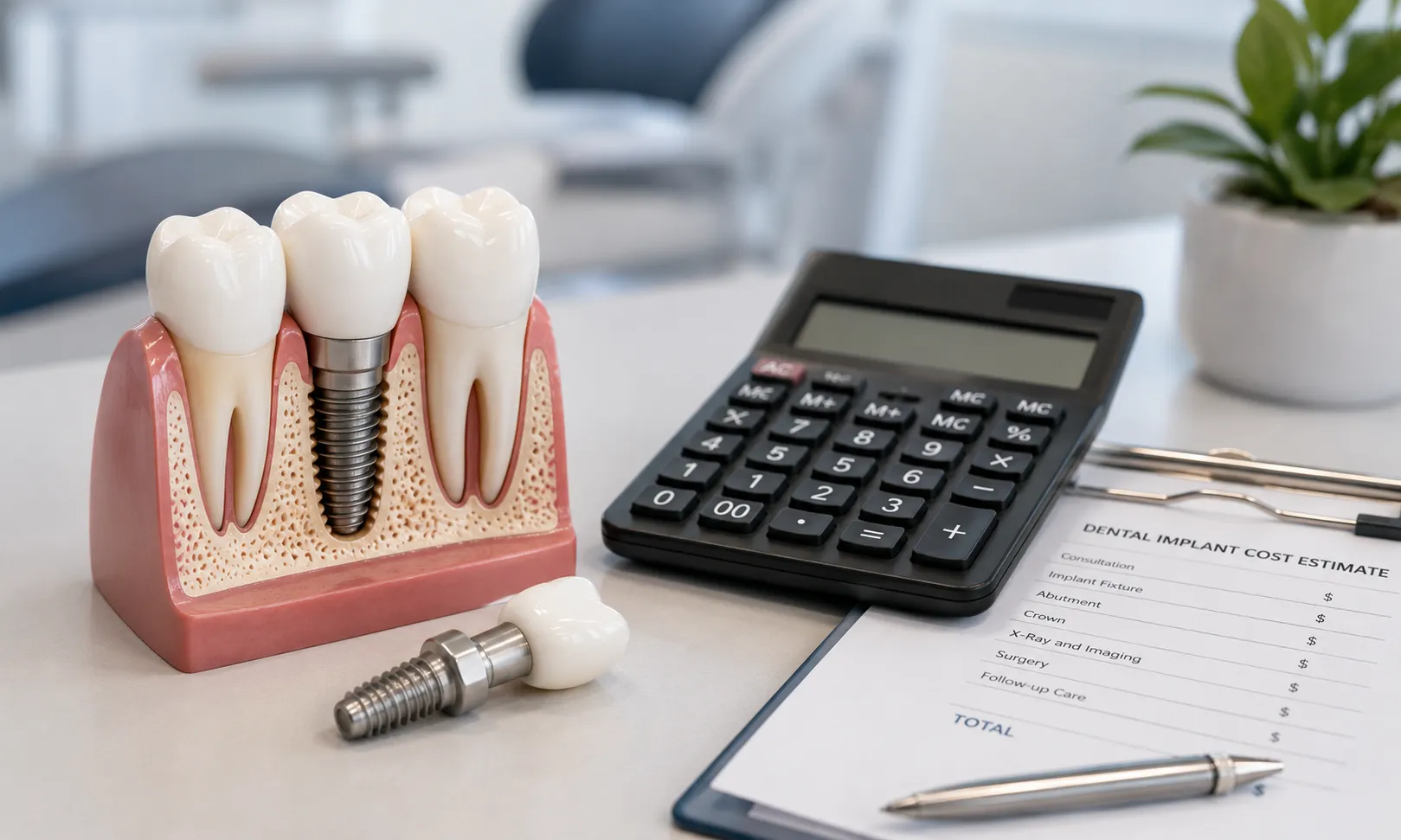
Dental implant pricing depends on the number of missing teeth, jawbone condition, restoration type, and whether additional procedures are required before implant placement. Single implants usually cost less than full-mouth implant reconstruction because surgical stages, materials, and restorative planning vary significantly between cases.
At Oasis Smile Studio, patients often begin with a dental implants evaluation to assess bone support, tooth loss patterns, and long-term restoration goals before a customized care plan is created.
What it is: A tooth replacement procedure that uses a titanium implant post to support a crown, bridge, or denture
Who it is for: Adults with missing teeth, damaged teeth, or severe tooth loss affecting chewing function or smile appearance
Main benefits:
Limitations:
Timeline / durability: Dental implant placement often takes several months depending on healing progression, while properly maintained implants can function for many years.
Dental implant pricing depends on surgical complexity, restoration materials, jaw support, and the number of teeth being replaced.
Several variables influence overall pricing, including:
For example, replacing one missing tooth generally costs less than restoring an entire dental arch because fewer implants, restorations, and appointments are required.
Pricing also increases in cases involving:
Extended tooth loss often leads to jaw shrinkage, which can reduce implant stability and increase surgical complexity.
The American Academy of Implant Dentistry explains that implant planning often includes surgical evaluation, restorative design, and long-term functional considerations.
Dental implant pricing often includes both surgical and restorative phases depending on the care plan.
A complete implant process may involve:
Some offices separate surgical and restorative fees, while others combine multiple phases into one estimate.
For example, sedation services, temporary restorations, and laboratory fabrication fees sometimes increase overall pricing depending on procedural scope.
Patients with severely damaged teeth sometimes require procedures connected to restorative dentistry before implant-supported restorations become appropriate.
Bone loss increases overall procedural expense because reduced jaw density often requires additional surgical preparation before implants can safely support bite pressure.
Jaw deterioration commonly develops after:
Significant jaw shrinkage can reduce implant stability and limit placement options.
Bone grafting procedures often rebuild weakened jaw areas by adding grafting material where structural support has deteriorated.
Additional procedures that increase pricing include:
For example, upper molar implants sometimes require sinus lift procedures because sinus cavities frequently expand after prolonged tooth loss.
Dental implants often cost more initially than bridges or removable dentures because implant placement includes surgery, healing stages, and implant-supported restoration fabrication.
| Treatment | Initial Cost | Longevity | Bone Support | Stability |
| Dental Implants | Higher | Long-term | Helps preserve bone | High |
| Dental Bridges | Moderate | Moderate | Does not preserve bone | Fixed |
| Dentures | Lower | Variable | Limited bone support | Removable |
Dental bridges often cost less upfront, but bridges rely on adjacent teeth for structural support. Removable dentures replace multiple missing teeth at a lower cost, although denture movement can affect chewing stability and speech clarity.
Implant-supported restorations often provide stronger jaw support and bite stability compared to removable appliances.
Patients comparing replacement options sometimes explore membership plans or financing pathways while evaluating restorative expenses.
Dental insurance coverage for implants varies depending on policy limits, annual maximums, and treatment classification.
Some insurance plans partially cover:
Other plans classify implants as elective procedures, which can reduce reimbursement availability.
Patients often benefit from reviewing:
Some patients also explore financing pathways connected to Cherry payment plans when monthly payment flexibility becomes important.
Dental implants often provide lasting structural and functional advantages because implant posts replace missing tooth roots instead of resting only on the gum surface.
Implants can help:
Untreated tooth loss frequently causes neighboring teeth to shift into open spaces and affect bite alignment.
For example, missing molars may create uneven chewing pressure that contributes to enamel wear, jaw strain, or bite imbalance over time.
Implant-supported restorations may also improve chewing comfort compared to removable appliances in some patients.
Dental implants can function for many years when patients maintain healthy oral hygiene habits and attend regular preventive evaluations.
Implant longevity often depends on:
Implant crowns sometimes require replacement earlier than the implant post because restorations experience daily chewing wear.
Peri-implant inflammation can gradually weaken surrounding structural support over time.
Patients commonly protect implant longevity by:
Dental implants are not immediately appropriate for every patient depending on medical history, bone availability, or oral health condition.
Additional evaluation is commonly recommended if patients have:
Active infection or advanced periodontal disease often requires stabilization before implant surgery begins.
For example, uncontrolled inflammation can interfere with bone healing and implant integration after surgery.
Single dental implant pricing varies depending on surgical complexity, imaging requirements, restoration materials, and whether additional grafting procedures are necessary.
Dental implants involve surgical placement, digital planning, healing stages, and implant-supported restorations, which generally increases procedural complexity compared to removable dentures.
Bone grafting often increases pricing because additional materials, healing stages, and surgical procedures are required before implant placement.
Dental implant placement often takes several months because bone healing and osseointegration usually occur gradually between surgical stages.
Dental implants are designed for long-term tooth replacement, although longevity depends on oral hygiene, gum health, bite pressure, and medical conditions over time.
Some smokers still qualify for implant placement, although smoking can increase healing complications and affect implant integration with surrounding jaw structure.
Missing teeth often affect chewing stability, jaw support, bite alignment, and long-term oral function. Bone deterioration, shifting teeth, and uneven bite pressure frequently worsen after tooth loss, which is why implant recommendations usually depend on jaw structure, missing tooth location, and restorative goals.
If you are noticing difficulty chewing, visible gaps, loose teeth, or long-term tooth loss, a dental evaluation may help determine whether implant placement is appropriate. If this applies to your situation, evaluating jaw support and surrounding tooth condition early can help clarify which restorative options are available.
Oasis Smile Studio provides personalized implant evaluations focused on long-term function, smile balance, and structural support rather than one-size-fits-all recommendations. Patients considering dental implants can request a consultation to evaluate surgical stages, healing expectations, financing options, and restoration choices based on their oral health condition.